Gaining AI Trust: How Reputation Signals and Reviews Influence Your Ranking in AI Search
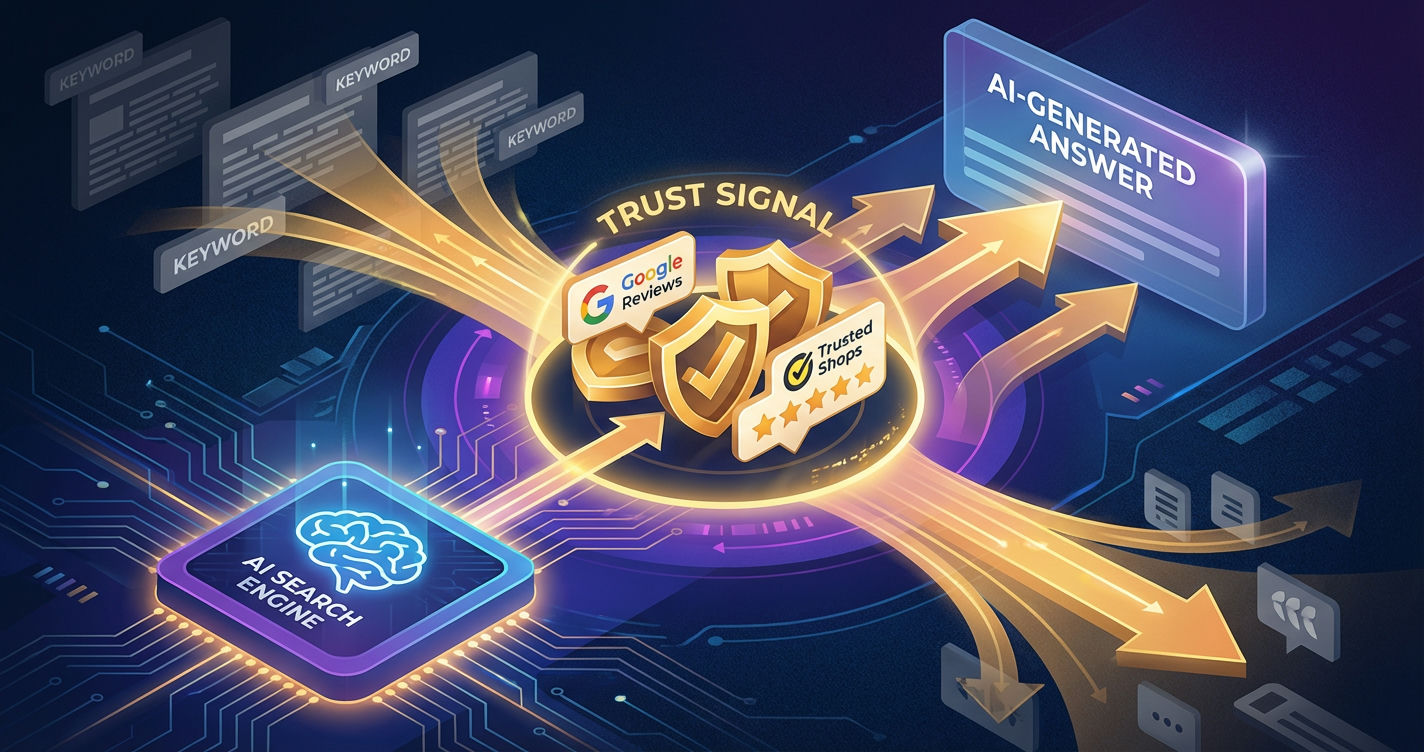
The New Era of Search: From Keyword Matching to Trust Clusters
The way users find information online is changing radically. While SEO specialists spent years focusing on optimizing keywords for the Google algorithm, we are now facing a new challenge: AI Search or Answer Engines (such as Perplexity, ChatGPT Search, or Google's Search Generative Experience - SGE).
AI models weight information differently than traditional search engines. They don't just look for relevance, but primarily for probability and trustworthiness. In a world where AI-generated content is flooding the internet, external validation signals are becoming the hardest currency. This is where reputation signals and reviews come into play.
E-E-A-T: The Foundation for AI Trust
Before we look at specific signals, we need to talk about E-E-A-T (Experience, Expertise, Authoritativeness, Trustworthiness). Google has used these guidelines for years, but for AI models, they have become vital.
In particular, the T for Trustworthiness is the pivot and anchor point. Large Language Models (LLMs) are trained on vast amounts of data. If a brand is consistently mentioned positively in forums, reviews, and rating portals, the AI learns: "This entity is safe and reliable."
Why Reviews Are More Important for AI Than for Humans
A human buyer might read three reviews and make a decision. An AI, on the other hand, processes all available reviews simultaneously to create a statistical profile of your company.
1. Trusted Shops: The Seal as a Semantic Anchor
Trusted Shops is far more than just a widget for buyer protection. For AI crawlers, the presence of such a seal is a strong signal for compliance with legal standards and high customer satisfaction. When an AI generates an answer like: "Where can I safely buy dietary supplements?", it filters out shops that do not have validated security features. A Trusted Shops profile provides structured data that can easily be interpreted by LLMs as a positive confirmation.2. Google Reviews: Local and Global Authority
Google Reviews are the most heavily weighted signal for local AI searches. When a user asks: "Which IT service provider in Berlin is the most reliable?", the AI does not just analyze the star rating. It analyzes the semantics of the reviews:- Are specific problems being solved?
- Do terms like "punctual", "competent", or "fair" appear frequently?
- How does the company respond to criticism?
Reputation Signals as "Social Proof" for Algorithms
AI models try to simulate human perception. That's why signals that build trust in humans also work for AI – just on a data-driven level.
Off-Page Sentiment Analysis
AI agents scan the web for mentions of your brand without a direct link (Brand Mentions). A positive tone on platforms like Reddit, Trustpilot, or in specialized forums acts as confirmation. When SEOs talk about "Entity-based Optimization," they mean exactly this: anchoring your brand as a trustworthy object (entity) in the AI's knowledge graph.The Role of Expert Content
In addition to reviews, authorship is crucial. Are your blog articles written by professionally qualified individuals? Are these authors linked to other publications on the web? AI models check the "digital footprints" of your experts to validate the expertise of your content.Practical Check: How to Optimize for AI Trust
To appear in the answers of ChatGPT, Perplexity, and others, you should implement the following checks:
- Structured Data (Schema.org): Explicitly store reviews and company data in your website's code. This allows AI crawlers to read facts (average star rating, number of reviews) without interpretation errors.
- Reputation Monitoring: Monitor not only your own site but also third-party platforms. A negative trend in Google Reviews can lead to an AI filtering your brand out of "best-of" queries.
- Active Review Generation: Encourage customers to write detailed reviews. Short "5 stars - everything great" reviews are good for the average, but long texts with specific keywords provide the AI with the necessary context to understand your service.
- Show Transparency: Link certificates (like Trusted Shops) prominently. This signals to the crawler that you undergo external quality controls.
The Future: Reputation Becomes the Primary Ranking Factor
In classic SEO, you could "fake" a lot with backlinks. In the AI Search era, this is more difficult. AI models compare sources and recognize inconsistencies. If your website claims to be a market leader, but Google Reviews and Trusted Shops ratings paint a picture of poor service, the AI will recognize this discrepancy and reduce your visibility.
Conclusion: Reputation signals are the new backlink profile. Those who invest in Trusted Shops, Google Reviews, and high-quality expert content today are securing their place in the AI-generated answers of tomorrow. Trust is no longer just a psychological factor for closing a sale, but a technical necessity for visibility in artificial intelligence.